Over the past year, we’ve seen incredible progress in AI-powered software development. The promise is compelling. Describe the application you want, answer a few questions, and watch AI build it for you. Platforms like Bubble.io and other AI-assisted development tools have made it possible for almost anyone to start building an application without writing code.
That is incredibly exciting.
It is also where many people are getting into trouble.
Not All AI Tools Are Created Equal
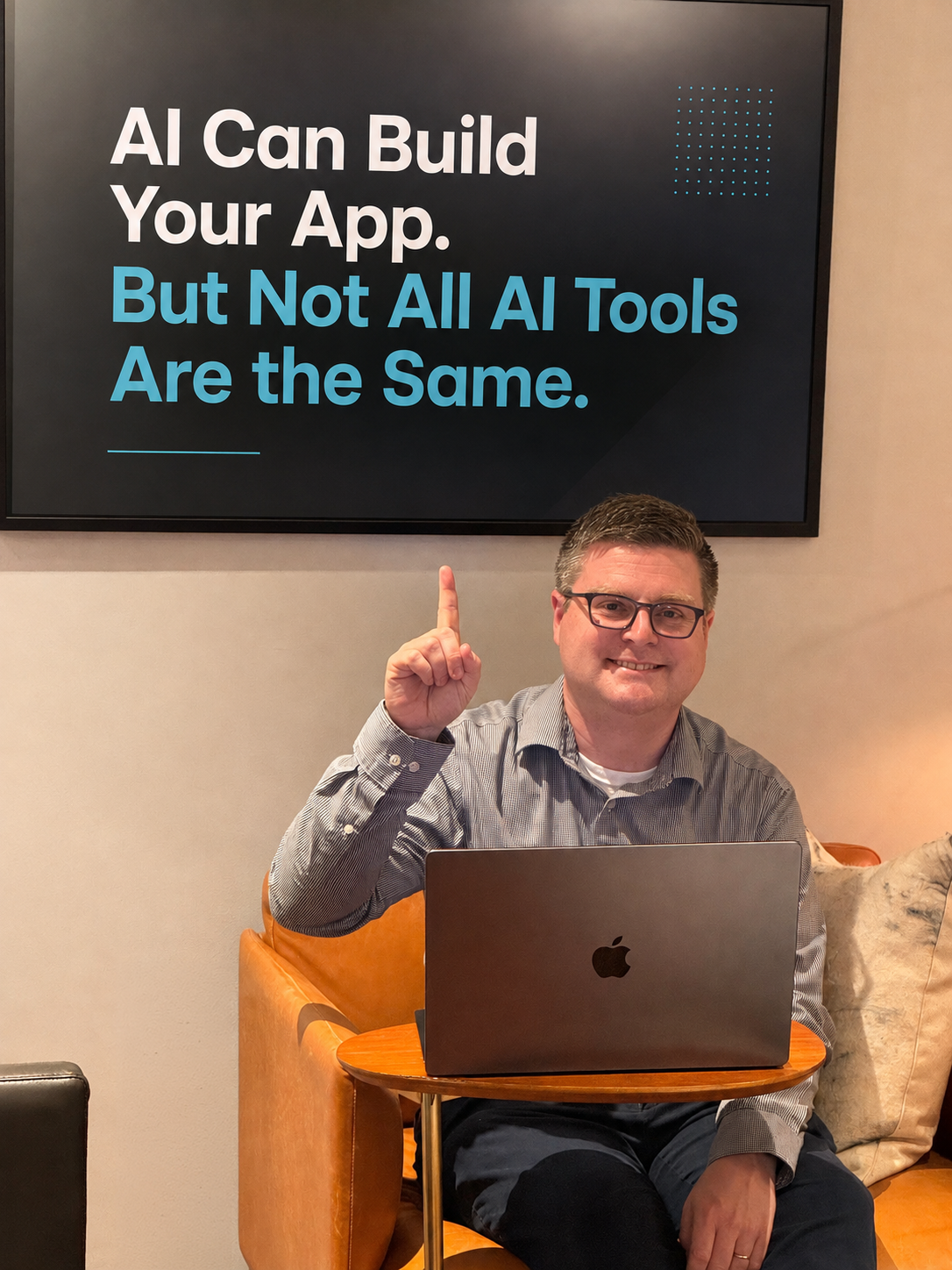
One of the biggest things I think most people overlook is that “AI” isn’t a single technology. There are hundreds of AI-powered development tools on the market today, and the gap in quality between them can be enormous.
Some AI tools are exceptional at helping experienced developers write, review, and improve code. Others promise that anyone can build an entire production-ready application with little or no technical expertise. Those are very different goals, and they don’t all deliver the same results.
We’ve had tremendous success using tools like Claude to accelerate software development. They help us move faster, explore ideas more quickly, and spend more time solving business problems instead of repetitive coding tasks.
For example, we recently used AI to significantly reduce a client’s cloud infrastructure costs while improving efficiency.
But not every AI platform is at that level.
As businesses evaluate AI solutions, it’s becoming just as important to choose the right AI tool as it is to choose the right software developer.
A Real-World Example
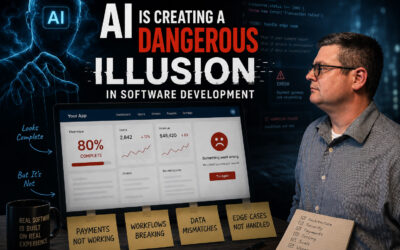
Recently, we worked with a client who had built most of a web application using Bubble.io. At first glance, it looked polished. The screens were attractive, the navigation was in place, and it felt like a real product.
The original request was straightforward. They needed help getting online payments working.
As we dug deeper, we discovered that the payment system was only one of many problems.
Several core features that users would expect simply didn’t work reliably. Important data wasn’t being saved correctly, and parts of the application appeared complete but were only partially functional.
Even more concerning, the user experience lacked consistency. Similar information was presented differently depending on where you were in the application. Some pages allowed users to update information that couldn’t be edited elsewhere. The same types of content were displayed differently across different screens. The application felt like it had been assembled piece by piece instead of designed as one cohesive product.
None of these issues were obvious at first glance.
AI Is Great at Building Features. Software Is More Than Features.
One of the biggest misconceptions about AI-generated software is that if the screens exist, the application is finished.
Professional software development has never been just about creating screens. A successful application requires thoughtful architecture, consistent user experience, reliable business logic, security, performance, testing, and long-term maintainability.
In fact, poor planning and architecture are often the biggest reasons software projects fail, long before anyone writes the first line of code.
Those are the parts that often separate a weekend prototype from a business that can serve thousands of customers.
AI is becoming remarkably good at producing code and interfaces. It is much less reliable at ensuring that every moving piece works together consistently across an entire application.
The Real Cost Isn’t Building. It’s Fixing.
Many entrepreneurs assume AI will dramatically reduce development costs.
When the project is done right, it does reduce cost.
But we’re beginning to see another pattern emerge.
Someone builds 70 or 80 percent of an application themselves using AI. Eventually, they hit a wall. Payments don’t work. User accounts break. Data becomes inconsistent. Performance slows down. New features become increasingly difficult to add.
At that point, experienced developers are brought in.
Unfortunately, fixing an application that was never built on a solid foundation can take as much time, or even more, than building it correctly from the beginning.
This isn’t unique to AI. Developers have been cleaning up rushed software projects for decades. AI simply makes it possible for many more people to build something that looks complete before discovering the hidden complexity underneath.
Choose the Right Tool for the Right Job
None of this means Bubble.io or similar platforms are inherently bad.
For prototypes, internal tools, proof-of-concepts, and validating business ideas, they can be incredibly valuable. Getting an idea into users’ hands quickly is often more important than perfect architecture.
The challenge comes when people mistake a prototype for a production-ready application.
Those are very different goals.
AI Is Changing Software Development
I believe AI will continue to fundamentally change how software is built. It already has.
The real challenge isn’t whether AI should be used. It’s understanding where it excels and where human expertise is still essential.
Developers who ignore AI will fall behind.
At the same time, businesses should be careful not to assume that every AI platform offers the same capabilities or that AI eliminates the need for software engineering. Good architecture, thoughtful design, consistency, scalability, and quality assurance are still essential.
AI is becoming an incredible assistant.
It is not yet a replacement for experienced software developers who know how to evaluate AI output, choose the right tools, and turn an idea into a reliable product that can grow with a business. This kind of technical leadership is exactly what I provide as a Fractional CTO.
The companies that succeed over the next several years will likely be the ones that combine both. They will use the best AI tools to move faster while relying on experienced engineers to make sure the foundation is strong enough to support the business they’re trying to build.
Thinking about building an application with AI? We’d be happy to review your idea, help you choose the right tools, and identify potential challenges before they become expensive problems.
Continue Reading
If you enjoyed this article, here are a few more posts that explore AI, software development, and technical leadership.
What I Actually Do Each Week as a Fractional CTO
Learn how a Fractional CTO helps businesses make better technical decisions, avoid costly mistakes, and build software that scales.
The #1 Reason Software Projects Go Wrong (and How to Avoid It)
Discover why successful software projects begin long before the first line of code is written.
How We Used AI to Cut Our AWS Bill by $700 a Month
See a real-world example of AI delivering measurable business value when paired with experienced software developers.
AI Isn’t the Enemy. Fear Is.
Explore why the future belongs to businesses that embrace AI thoughtfully rather than fear it.